How to reduce electrical estimating errors in construction projects
Estimating best practices
.jpg)
Electrical estimating mistakes are rarely catastrophic in isolation. A missed symbol here, a formula error there, individually they look minor. Collectively, they can erode a project margin before work has even started on site.
For electrical estimators, the estimating stage is where commercial risk is either controlled or created. This article covers the most common sources of error, and the practical steps you can take to reduce them.
Before addressing how errors happen, it is worth being clear about what they cost because the consequences extend beyond a single tender.
Electrical estimating errors almost always run in one direction: under-count. When quantities are understated, the contract price is set too low and the margin is already gone before the first fix begins. On a competitive, fixed-price contract, there is rarely a mechanism to recover that shortfall from the client.
A consistent 3-5% error rate across your tender portfolio does not just affect individual projects, it compounds into a structural margin problem.
Tendering is a volume game for many electrical estimators. More tenders, faster turnarounds, tighter deadlines. That pressure creates the exact conditions in which estimating errors proliferate: rushed counts, insufficient review time, and drawings that have not been checked for revisions.
Quantity errors discovered on site create a different set of pressures. Material shortfalls require emergency procurement, often at unfavourable prices. Programme delays follow. Relationships with main contractors and clients suffer. The reputational cost of a project that runs into trouble at delivery can outweigh the financial loss on that contract alone.
Understanding where errors originate is the first step to eliminating them. Most electrical estimating mistakes fall into a small number of recurring categories.
On a complex commercial project, a single drawing can contain hundreds of electrical symbols across multiple layers. Manual counting, whether on paper or using PDF markup, is vulnerable to omission. Symbols are missed because they are small, clustered, or located in an area of the drawing that received less attention. On a 50-drawing commercial project, even a 2% miss rate can mean dozens of unpriced items.
This is the most common single source of quantity error in electrical estimating. It is also the most directly addressable through automation.
Even when symbols are correctly identified, quantities can be wrong. Multipliers applied incorrectly in a spreadsheet, circuit counts based on an earlier drawing revision, or items duplicated across drawing sheets all introduce quantity errors that are difficult to detect without a systematic cross-check.
Most electrical estimating workflows rely heavily on spreadsheets. Spreadsheets are flexible and familiar but they are also fragile. A broken formula reference, an accidental overwrite, or a copy-paste error can silently corrupt figures throughout a cost plan. Spreadsheet errors are particularly insidious because they often look correct until a line-by-line audit reveals the problem.
Research across industries consistently finds that a significant proportion of spreadsheets in active commercial use contain material errors. Estimating spreadsheets, built under time pressure and rarely audited systematically, are no exception.
Drawings are revised. Specifications are updated. When an estimating team is working from an earlier revision, because the latest issue was not distributed, was not noticed, or was not cross-referenced against the existing takeoff, the quantities produced may be entirely valid for a version of the project that no longer exists.
Revision management is one of the more underappreciated sources of estimating error, particularly on projects with active design development during the tender period.
Process improvements reduce error risk before technology is even considered. These are the foundations of a more reliable estimating function.
Inconsistency is a risk factor. When each estimator uses a different approach, for example different spreadsheet templates, different symbol naming conventions, or different methods for handling revisions, errors are harder to spot and harder to prevent.
A standardised workflow means every tender is produced the same way. That consistency makes quality control practical: a reviewer knows exactly where to look, and what a correct output should look like.
Standardisation also reduces the risk that sits in individual estimators. If your accuracy depends on the habits of specific people rather than on a documented process, you have a resilience problem as well as an accuracy one.
Every drawing revision should trigger a defined review process: identify what has changed, assess the impact on quantities already taken off, and update the estimate accordingly. This sounds straightforward; in practice, it is rarely done systematically.
A disciplined revision review process requires:
Without these, revision management relies on individual memory and attention, both of which are unreliable under tender pressure.
When project information is distributed across email threads, local drives, and individual spreadsheets, version control breaks down. Estimators may be working from different drawing sets without realising it. Specification updates may not reach everyone who needs them.
Centralising project data, including drawings, specifications, count files, and correspondence, in a single shared location removes ambiguity about what the current source of truth is. This is a structural fix that reduces a broad category of revision and specification errors.
Process improvement has limits. At a certain scale of project complexity or tender volume, manual processes cannot deliver the accuracy and consistency that the commercial environment demands. This is where technology makes a substantive difference.
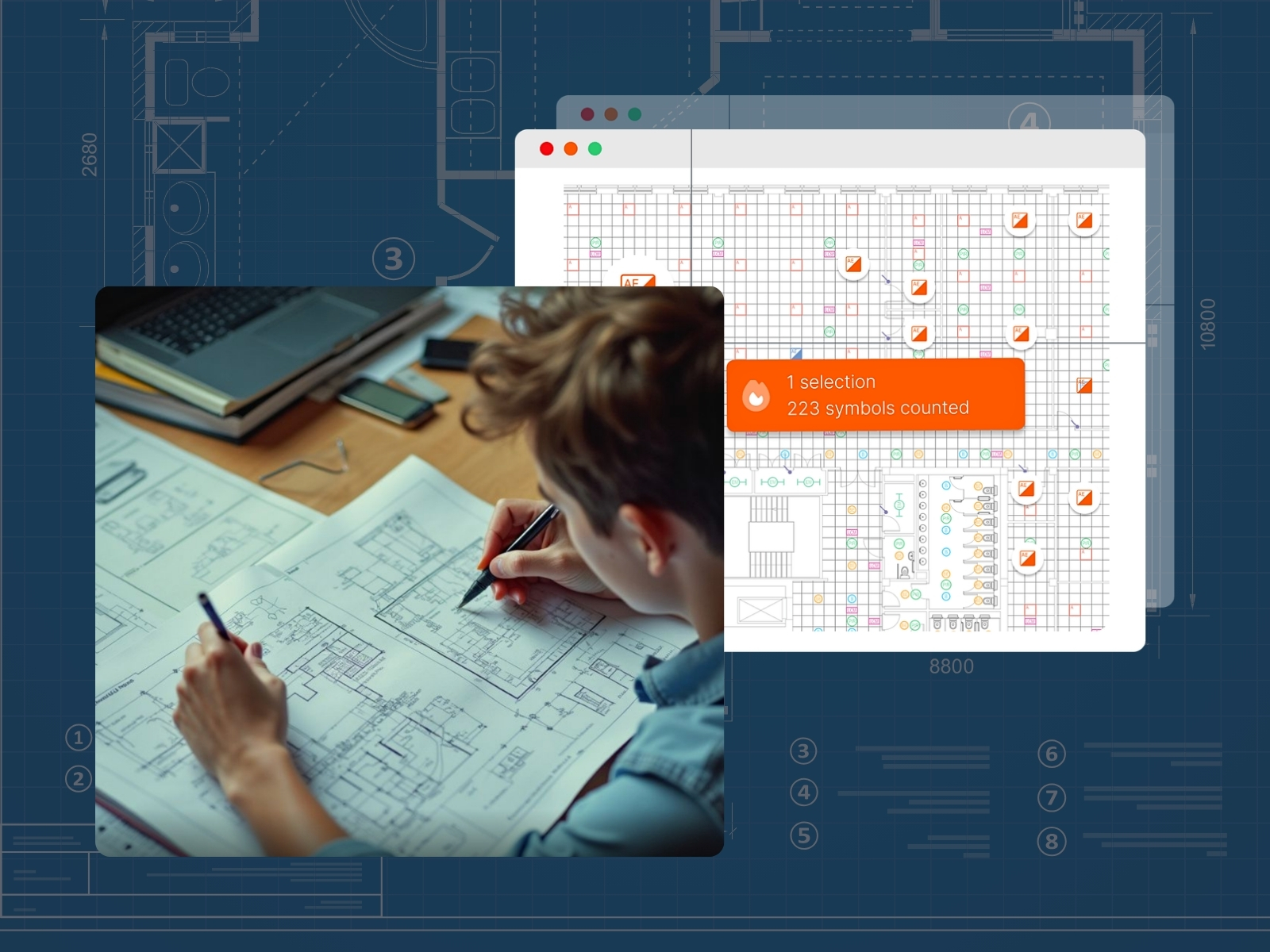
Automated takeoff software removes the manual symbol-counting task entirely. Rather than an estimator working through a drawing and tallying each symbol, the software scans the drawing and returns a count, flagging every instance so the estimator can verify the output visually.
This eliminates the primary source of missed symbol errors. It also makes the count auditable in a way that manual tally marks never are.
Some takeoff platforms include tools for comparing drawing revisions, making it easier to identify what has changed between issues. Rather than relying on an estimator to spot differences across a large drawing set, the software flags the changes systematically.
This directly addresses the revision management problem one of the harder estimating challenges to solve through process alone.
Built-in validation, flagging symbols that appear on one drawing but not another, or highlighting discrepancies between count totals and expected ranges provides a layer of quality control that is difficult to replicate in a spreadsheet environment.
Software-based accuracy checks do not replace estimator judgement. They reduce the probability that an error passes through the process undetected.
Spreadsheets deserve specific attention because they are so deeply embedded in electrical estimating workflows and because their limitations are frequently underestimated.
The fundamental issue is that spreadsheets are built, not designed. Each company's estimating template has evolved over years through additions, modifications, and workarounds. The result is often a complex document that few people understand fully, where errors can hide in formula logic or conditional formatting that is never examined.
Spreadsheets also have no version control by default. When an estimating spreadsheet is modified mid-tender, there is no automatic record of what changed, when, or why. Errors introduced during revision are nearly impossible to trace retrospectively.
None of this means spreadsheets should be eliminated from estimating workflows. But relying on them as the primary accuracy control rather than as an output format for data produced by more robust tools is a risk that grows with project size and tender volume.
Reducing electrical estimating errors is not a single intervention. It is the result of attention to process, workflow, and tooling across the estimating function.
The practical steps are straightforward:
The goal is an estimating process where accuracy does not depend on individual diligence under pressure because that is a condition you cannot reliably sustain across every tender, every deadline, every team member.
Electrical estimating errors are not inevitable. Most are traceable to specific, addressable weaknesses in process or tooling: manual counts on complex drawings, unmanaged revisions, spreadsheet fragility, or inconsistent workflows.
Companies that take a systematic approach to these problems, such as standardising processes, controlling revisions, and using technology where it reduces human error, consistently produce more accurate estimates. That accuracy compounds: better pricing, better margins, and fewer problems encountered at delivery.
If your estimating function is producing errors that only become visible on site, the source of those errors is almost certainly identifiable and fixable.
Start a free trial of Countfire and run your next takeoff through it, most estimators see the difference within the first project.

.jpg)